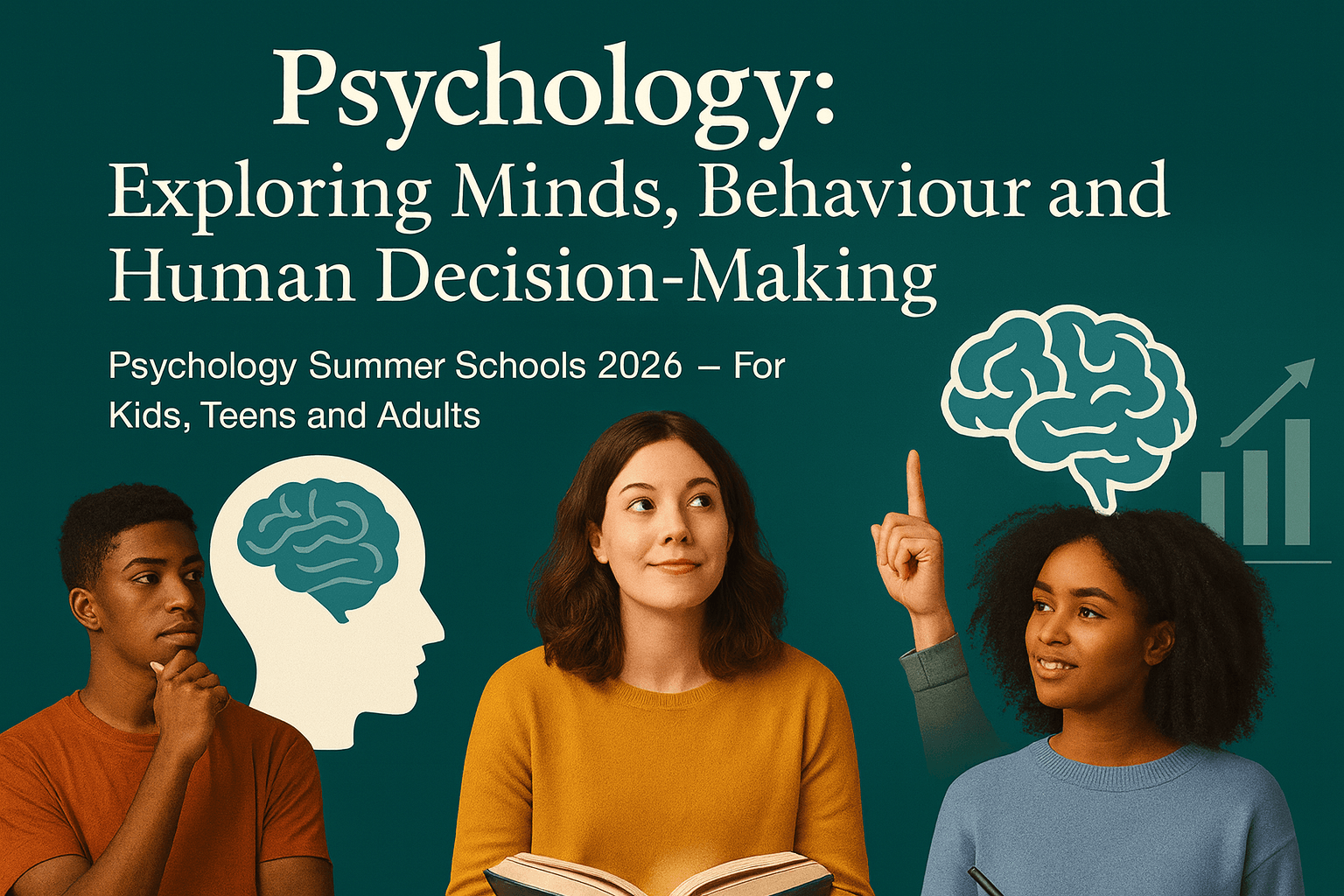
Psychology Summer Schools 2026 — For Kids, Teens and Adults
Psychology summer schools help students stop just learning about the mind — and begin understanding how it works in real life. From Cognitive Psychology, Neuropsychology, Behavioural Economics, Criminology, and Psychology in Oxford, Cambridge, London, Tokyo or Toronto — these programmes encourage students to think deeply about how we learn, how we think, how we behave, and why people make different decisions.
Younger students (ages 8–12 and 13–15) are gently introduced to the study of the mind through age-appropriate concepts such as perception, memory, fairness, friendships and decision-making. Courses like Psychology in Cambridge (13–15) or Discover Medicine Academy (8–12, with psychology elements) help them begin thinking about how the brain, behaviour and wellbeing are connected, using simple examples and guided reflection rather than theory-heavy teaching.
For early teens and school-aged learners (13–15, 16–18), psychology becomes more structured. Courses such as Experience Psychology & Neuroscience Academy, Neuropsychology (The Oxford Tradition), or Psychology in Oxford and Cambridge help students explore how the brain links to behaviour, how thoughts influence decisions, and where psychology meets medicine, criminology or economics. Through case examples, students begin to ask: Why do people behave differently in similar situations? How do emotions, culture, and environment shape choices?
For older teens and young adults (16–18, 19+), programmes such as Introduction to Cognitive Psychology (Oxford), Faculty of Psychology in Cambridge, Behavioural Economics, and Computational Psychology and Artificial Intelligence (Oxford, 19+) introduce deeper content. These courses focus on how psychology interacts with neuroscience, data, law, economics, health, and artificial intelligence, helping students explore whether psychology is a future academic or career pathway.
These programmes don’t simply teach about psychology — they help students recognise how it applies to everyday life, future study, medicine, behavioural science, law, and human understanding.
Psychology is a vast field — from emotions, memory and personality to brain function, decision-making, mental health, and behaviour in society. Summer schools now offer themed pathways that match different ages, interests, and future goals. Whether you’re naturally curious about people, considering medicine, fascinated by criminology, or drawn to neuroscience, AI or behavioural science — there is a psychology course designed for you.
Here’s how the different pathways break down.
Introductory courses that explore the mind, behaviour, communication, emotions, and personality. Ideal for students discovering psychology for the first time or wanting a broad overview.
Examples: Psychology in Oxford (16–18), Psychology in Cambridge (13–15 and 16–18), Psychology in London (15–18), Psychology (The Oxford Summer Seminar)
These courses explore how the brain works: memory, perception, decision-making, mental processing, and brain function. Suitable for students interested in the scientific side of psychology or links to medicine and brain study.
Examples: Experience Psychology and Neuroscience Academy, Introduction to Cognitive Psychology (Oxford, 19+), Neuropsychology (The Oxford Tradition), Psychology in Toronto, Psychology in Tokyo
Designed for students considering psychology-linked careers in medicine, psychiatry, behavioural health, or public health. These courses explore how psychological knowledge supports diagnosis, well-being, and patient care.
Examples: Faculty of Psychology in Cambridge (14–17), Medicine and Public Health (Oxford Institute for Advanced Studies), Medicine in Cambridge, Medicine in Oxford, Discover Medicine Academy
These programmes link psychology to real-world applications such as marketing, leadership, behavioural economics, consumer choices and human decision-making.
Examples: Psychology, Marketing and Leadership, Behavioural Economics (Cambridge Tradition), Computational Psychology and Artificial Intelligence (Oxford, 19+), Psychology (Oxbridge in Barcelona)
Courses exploring human behaviour in legal and social contexts — why people commit crime, how justice systems work, and what forensic psychology reveals about motivation and accountability.
Examples: Criminology (Oxford Tradition), Criminology (Cambridge Tradition), Criminology (Oxford Experience), Criminology (Oxbridge in New York)
Courses that allow students to study psychology within different cultural, social and international settings, helping them understand how the environment shapes behaviour and thought.
Examples: Psychology in Tokyo, Psychology in Sydney, Psychology in Barcelona, Psychology in Toronto, Psychology in London.
Below are a few standout programmes that show how psychology is brought to life across different locations
Psychology in Oxford (Ages 16–18) — Immerse Education
Ages 16–18 | Oxford | Enrolling Now | Fees from £7,495 (2 weeks)
What students say:It was a very academic program yet fun. It’s well-organized, the mentors are lovely and willing to help if somebody is in need. I loved this experience! (Immerse Education)
At a Glance
Explore the science of the mind in Oxford, a global hub for psychology and neuroscience. This course introduces students to key areas such as cognitive psychology, social behaviour, mental health, and research methods — helping them understand how psychologists investigate the human mind and apply theory to real-world issues like wellbeing, education, and healthcare. With small classes, expert tutors, 1:1 guidance, and life in real Oxford University colleges, students gain analytical skills, university insight, and a deeper sense of whether psychology is right for them.
Discover Medicine Academy (Ages 8–12) — Oxford Scholastica Academy
Ages 8–12 | Oxford | Enrolling Now | Fees from £6,995 (2 weeks)
What parents say: My child came back talking excitedly about diagnosing patients, using stethoscopes, and even debating medical ethics — I’ve never seen him so inspired. He now dreams of becoming a doctor! (Oxford Scholastica Academy)
At a Glance
Designed especially for younger learners, this course introduces children aged 8–12 to the world of medicine in a fun, hands-on, and age-appropriate way. The children explore basic clinical skills and discover how doctors think — which naturally introduces elements of psychology, such as empathy, decision-making, communication, and understanding how people feel. With small classes, supportive tutors, and interactive activities, they learn not only about the human body but also about caring for others — a foundation for both medicine and psychology. Living and studying in real Oxford University settings, they gain confidence, curiosity, and friendships — making it the perfect first step for children curious about medicine, people, and how the mind and body work together.
Psychology (Oxbridge in Barcelona) — Ages 15–18
| 4 weeks | $9,995
What students say: My experience exceeded my expectations. I made many new friends, explored subjects in depth, and it helped me decide what I want to study at university. I loved it and would definitely consider it again.(Oxbridge Academic Programs)
At a Glance
Experience psychology in the vibrant setting of Barcelona, where learning goes beyond textbooks and into real urban and cultural spaces. This four-week course introduces students to major psychological theories, research methods, and famous case studies, while also guiding them through designing and testing their own experiments. Classes take place in classrooms, labs, studios, and occasionally out in the city itself. The programme blends academic study with cultural immersion, independent thinking, and early exploration of potential psychology-related careers — ideal for students considering university-level psychology or behavioural sciences.
Introduction to Cognitive Psychology (Ages 19+) — Lady Margaret Hall, University of Oxford
Ages 19+ | Oxford | Enrolling Now | Fees from £4,384 (3 weeks)
What students say about Lady Margaret Hall:
It was absolutely worthwhile! The academic side was amazing. I loved the tutorial system. I learned so much and developed great relationships with my tutors. I also made amazing friends that I will keep in touch with.
At a Glance
Learn how the human mind works. This three-week academic programme introduces adult learners to key areas of cognitive psychology, including attention, memory, learning, language, and consciousness. Taught within Lady Margaret Hall, using Oxford’s world-renowned tutorial model, students experience personalised small-group academic learning, critical thinking, and rigorous weekly assignments. Participants benefit from seminars led by university academics, full-board college living, and a rich social and cultural programme — including excursions and formal academic events. With a focus on research, theory, and real-world application, this course offers a solid foundation for further university study, personal development, or academic credit — in a setting synonymous with intellectual discovery.
The table below sets out what the student can expect to have achieved by the end of the course.
| Provider | Skills Development | Accreditation & Academic Value | Personal Development |
|---|---|---|---|
| Immerse Education (Oxford & Cambridge) | • Critical thinking & academic research • Seminar debates and analytical writing • Subject-specific exploration (medicine, psychology, law) • Independent project work and presentations |
• Certificate of completion • Personalised tutor report • University-style 1:1 tutorials • Supports personal statement & university applications |
• Academic confidence and communication • Cultural awareness through global peers • Independence and future study clarity • Increased motivation and goal-setting |
| Oxford Scholastica Academy | • Real-world case studies and simulations • Debate, public speaking, and problem-solving • Introduction to professional pathways • Teamwork and presentation skills |
• Graduation certificate • Letter of recommendation • Exposure to Oxford-style teaching • Useful for GCSE/IB/A-level enrichment |
• Increased confidence and independence • Entry-level insight into medicine, psychology, and law • Empathy, social awareness, and responsibility • Early exposure to career exploration |
| Oxbridge Academic Programs | • Inquiry and research-based learning • Cultural immersion and critical thinking • Multilingual communication and creativity • Exploration of psychology, criminology, architecture |
• Certificate of achievement • Academic transcript for some locations • University-style seminars and classroom formats • Strong fit for US college preparation |
• Global awareness and maturity • Cross-cultural friendships and confidence • Increased resilience and independence • Personal identity development |
| Lady Margaret Hall (University of Oxford) | • Advanced academic writing and theory • Tutorial-based critical discussion • Research methods and analysis • Seminar-led subject exploration |
• Oxford transcript & certificate • Academic credit (ECTS/US credits) • Assessed coursework and feedback • Suitable for pre-university & adult learners |
• Intellectual maturity and academic identity • Confidence in discussion-based learning • Independence through college-style living • Inspiration for career and postgraduate study |
Today, more young people than ever are struggling with anxiety, stress, and mental health challenges — making psychology not just fascinating, but essential. Understanding how the mind works isn’t only for future doctors or psychologists; it’s for anyone who wants to support others, make better decisions, and build emotional resilience.
If you’re curious about people — and want to be part of a generation that understands, supports, and leads with empathy — psychology is where that journey begins.


Psychology examines the mind, behaviour and experience, through both scientific research and conceptual theorising.
View more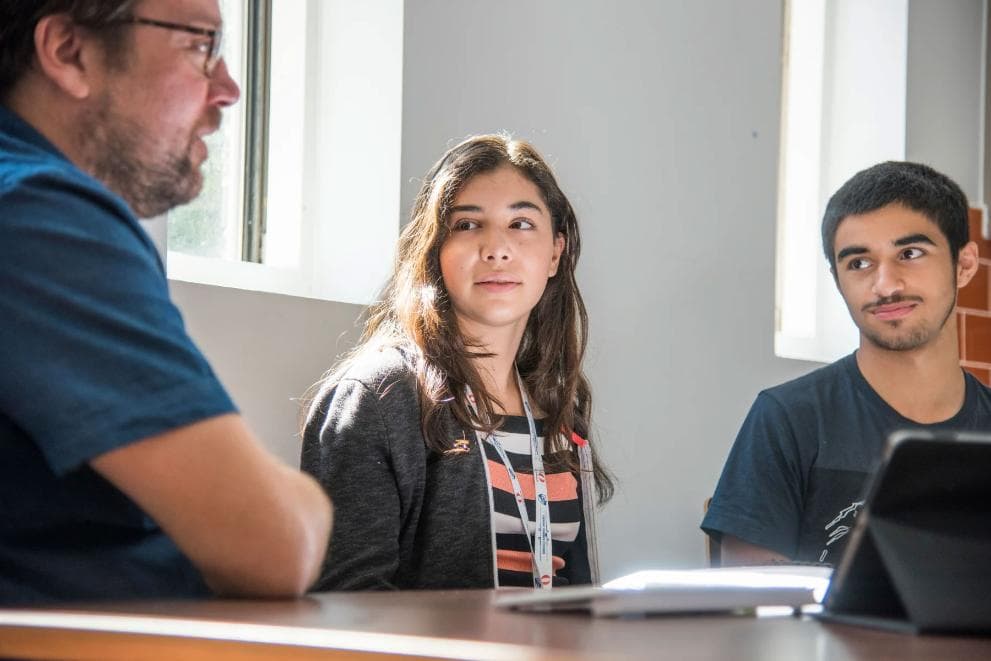

The Psychology summer school at Oxford Summer Courses, designed for 13-15 years old students, provides seminars and small group learning and is priced from £6,995.
View more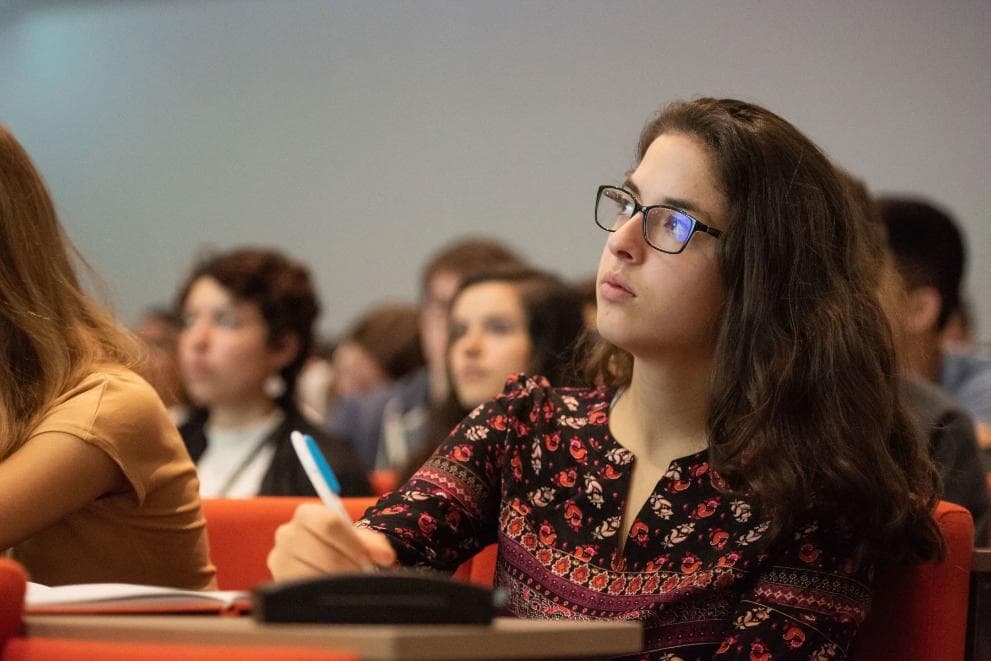
The Psychology Cambridge summer school at Oxford Summer Courses, designed for 13-15 years old students, provides seminars and small group learning and is priced from £6,995.
View more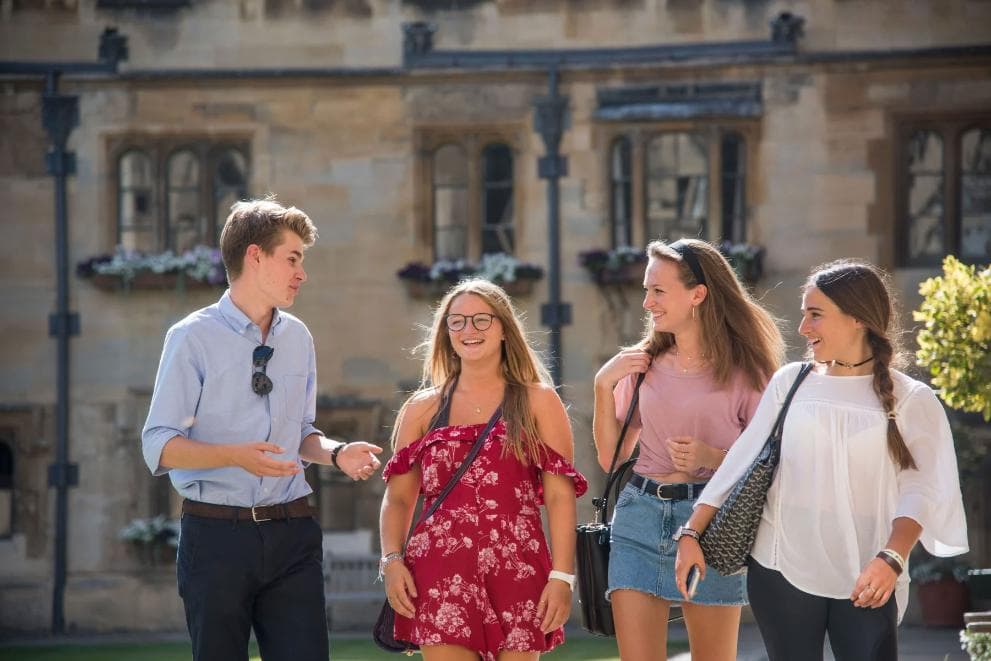
The Psychology Cambridge summer school at Oxford Summer Courses, designed for 16-17 years old students, provides tutorials and is priced from £6,995.
View more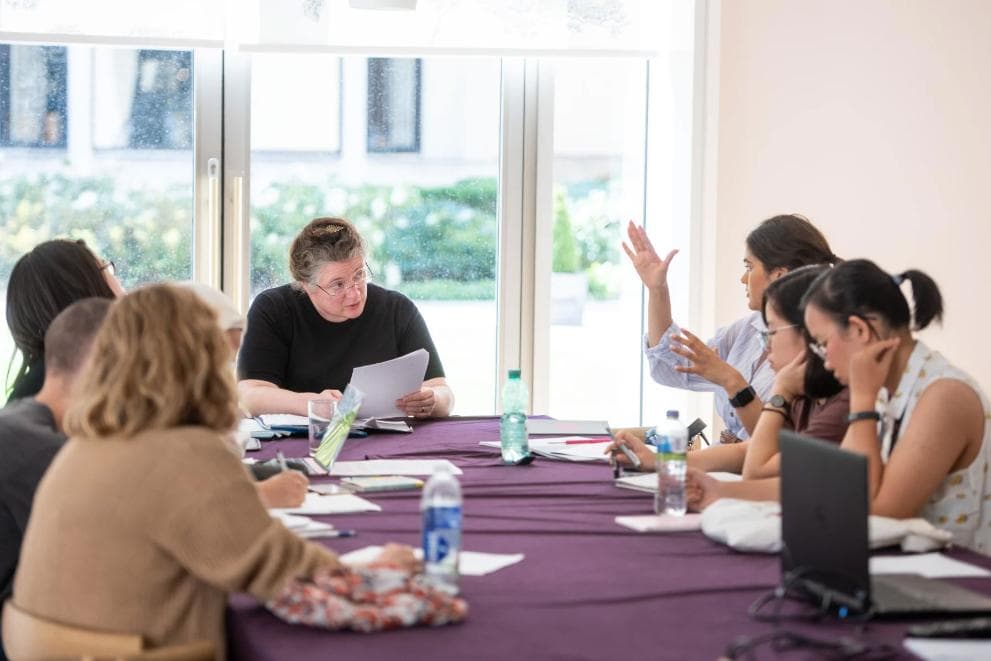
The Psychology summer school at Oxford Summer Courses, designed for 16-17 years old students, provides tutorials and is priced from £6,995.
View more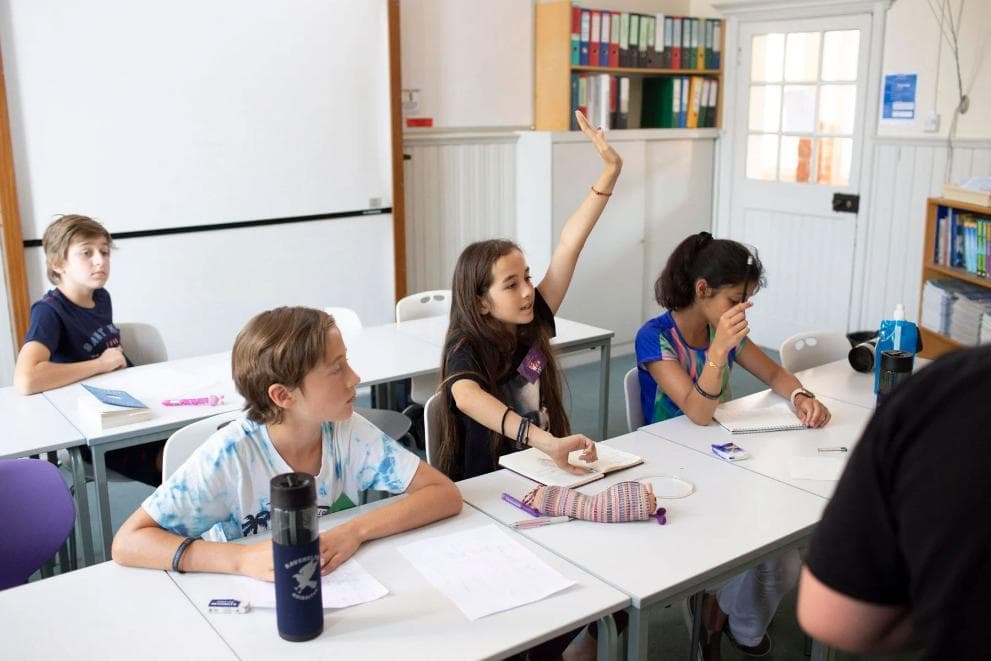
The Psychology summer school at Oxford Summer Courses, designed for 18-24 years old students, provides tutorials and is priced from £6,995.
View more

In this survey course, students investigate a wide range of psychological topics including dreams, memory, consciousness, anxiety, body language, gender, sexuality, and education. As well as examining the history of the subject, select case histories, and various mental disorders, students are introduced to research methodologies and diverse analytical frameworks in order to design their own experiments. They come away from the course with a better understanding of the career options in this field and possible areas for further research.
View more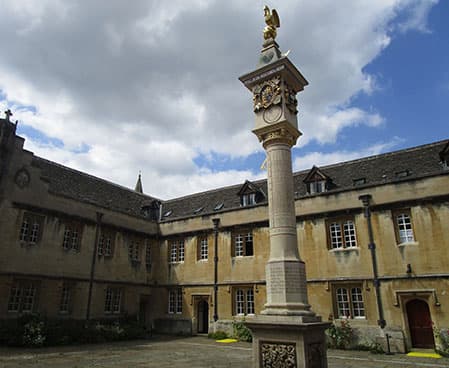
Led by cutting-edge researchers engaged in experimental psychology, students address a different topic each class. These include introductions to mental processes and problem solving, evolutionary psychology, clinical psychology, behaviorism, and psychoanalysis. In addition to surveying various fields, students learn how research projects are developed and experiments undertaken.
View more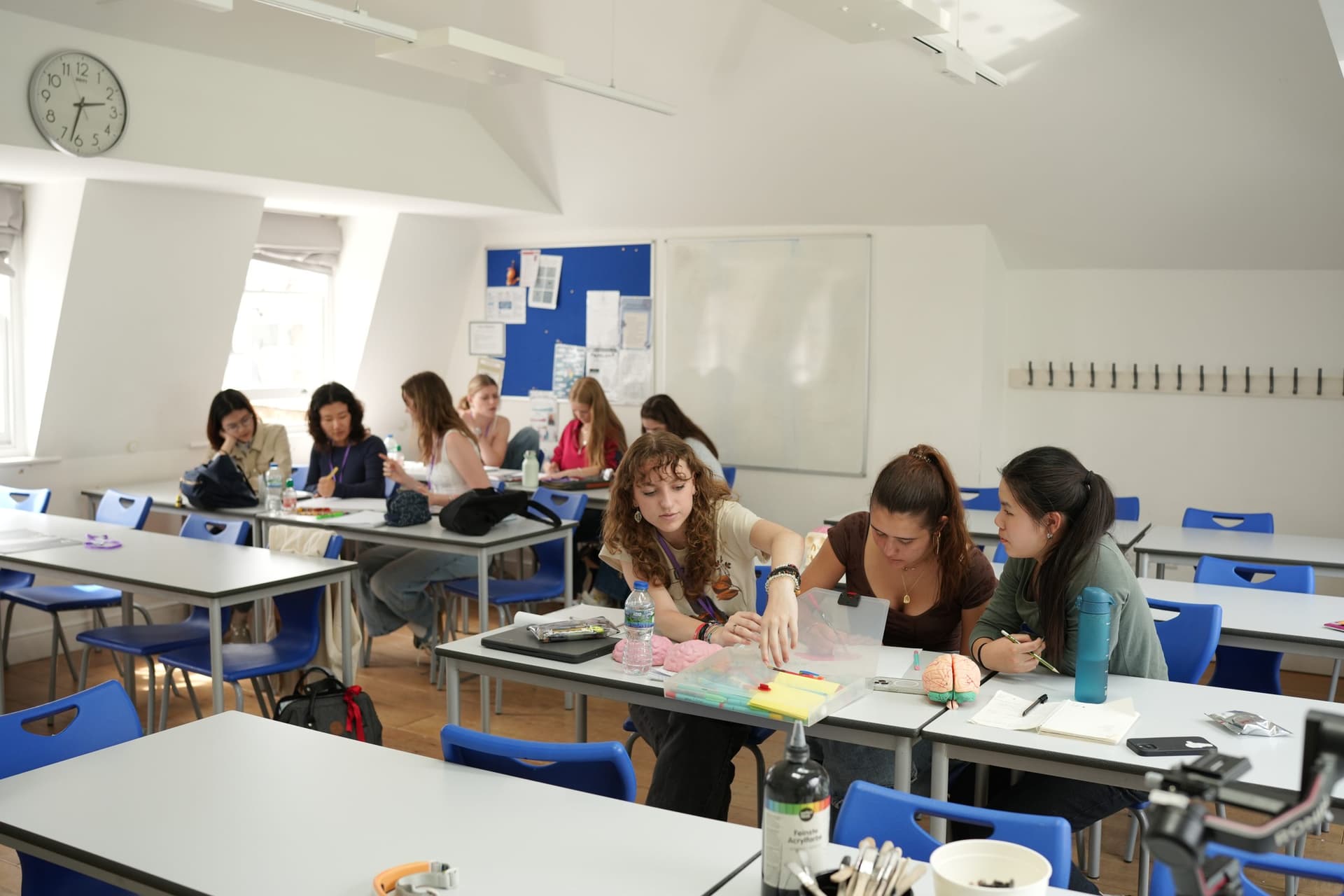

Unlock your future in psychology with Study Mind’s Psychology Summer Career Camp. Take part in hands-on, practical workshops led by expert psychologists and clinicians who visit the programme, giving you real-world insight. Develop key psychological skills and immerse yourself in the fascinating world of psychology in the heart of London.
View more

How does the brain process information, make decisions, and learn? Computational Psychologists seek to answer these questions by using algorithms and mathematical models to simulate and analyse the mechanisms behind mental processes. The field has been highly influential on Artificial Intelligence research and development, as data scientists attempt to convincingly recreate human thought, speech, and behaviour in machines, a challenge Alan Turing called the ‘Imitation Game’. Introducing Computational Psychology, Computational Neuroscience, and AI, this course offers a fascinating insight into these exciting and forward-looking interconnected fields of research.
View more

Fascinated by the human mind, thought and behaviour? If you’re thinking of studying psychology, this course will give you a great head start. You’ll learn how to define and measure personality, explore the connection between language and thought, and start to better understand social psychology and human interaction. You’ll also learn practical research skills.
View more

The Faculty of Psychology at Cambridge introduces you to the study of the mind and behaviour, from memory and perception to social influence and mental health. This programme is designed for students curious about why people think, feel, and act as they do. Through theory, experiments, and applied case studies, you’ll build a foundation in psychology and develop the skills to analyse human behaviour in both individual and group settings.
View more
How are we able to focus on one thing rather than something else? Why do we remember some things and forget others? What makes human beings intelligent? This course offers the opportunity to explore these questions and more through an introduction to Cognitive Psychology, a key area within Psychology which examines how the brain works.
View more
Using cognitive, experimental, and clinical approaches, students explore the structure and function of the brain as it relates to cognitive process and behavior. Students address the principles of neuroscience, neurology, and psychiatry, learn select diagnostic techniques, and study brain injuries and mental disorders. Classroom experiments are complemented by visits to laboratories.
View more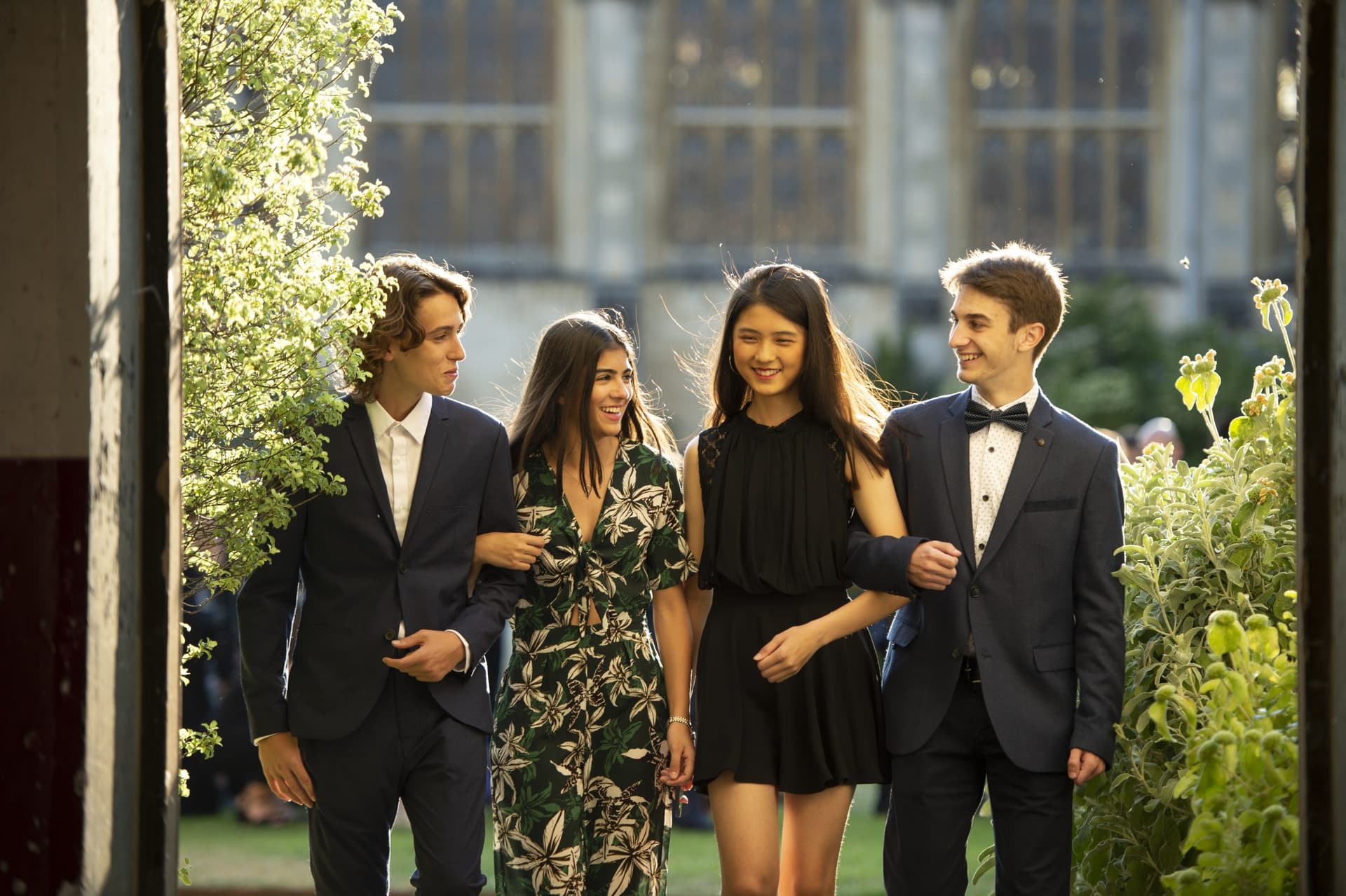

This programme prepares students to excel in their chosen subjects within the highly competitive higher education environment. Students choose one university-level subject taught at a first-year undergraduate level.
View more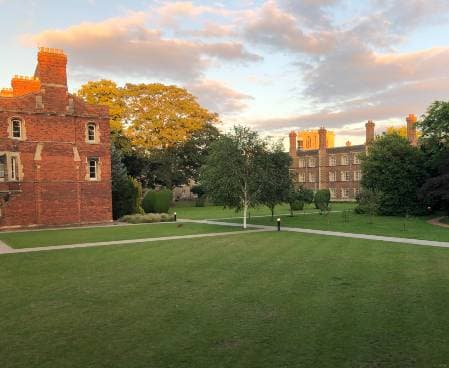
Mixing economics with psychology and game theory, this course seeks to understand what drives individual economic decisions. What psychological and emotional factors induce people to buy a $5 cup of coffee? How can we explain consumers' decisions when they depart from the expectations of standard economic models? How do risk and uncertainty impact people's spending? Students investigate areas such as luxury goods, healthcare, insurance, and labor while considering how psychology affects economic decision-making.
View more
Drawing on aspects of criminology, law, psychology, and forensics, students seek to understand what makes a criminal and what society's response to criminal behavior reveals about the community itself. They spend time with NYPD officers, lawyers, visit courthouses, and learn how the authorities are adapting to challenges such as cybercrime and terrorism while examining all aspects of the criminal justice system.
View more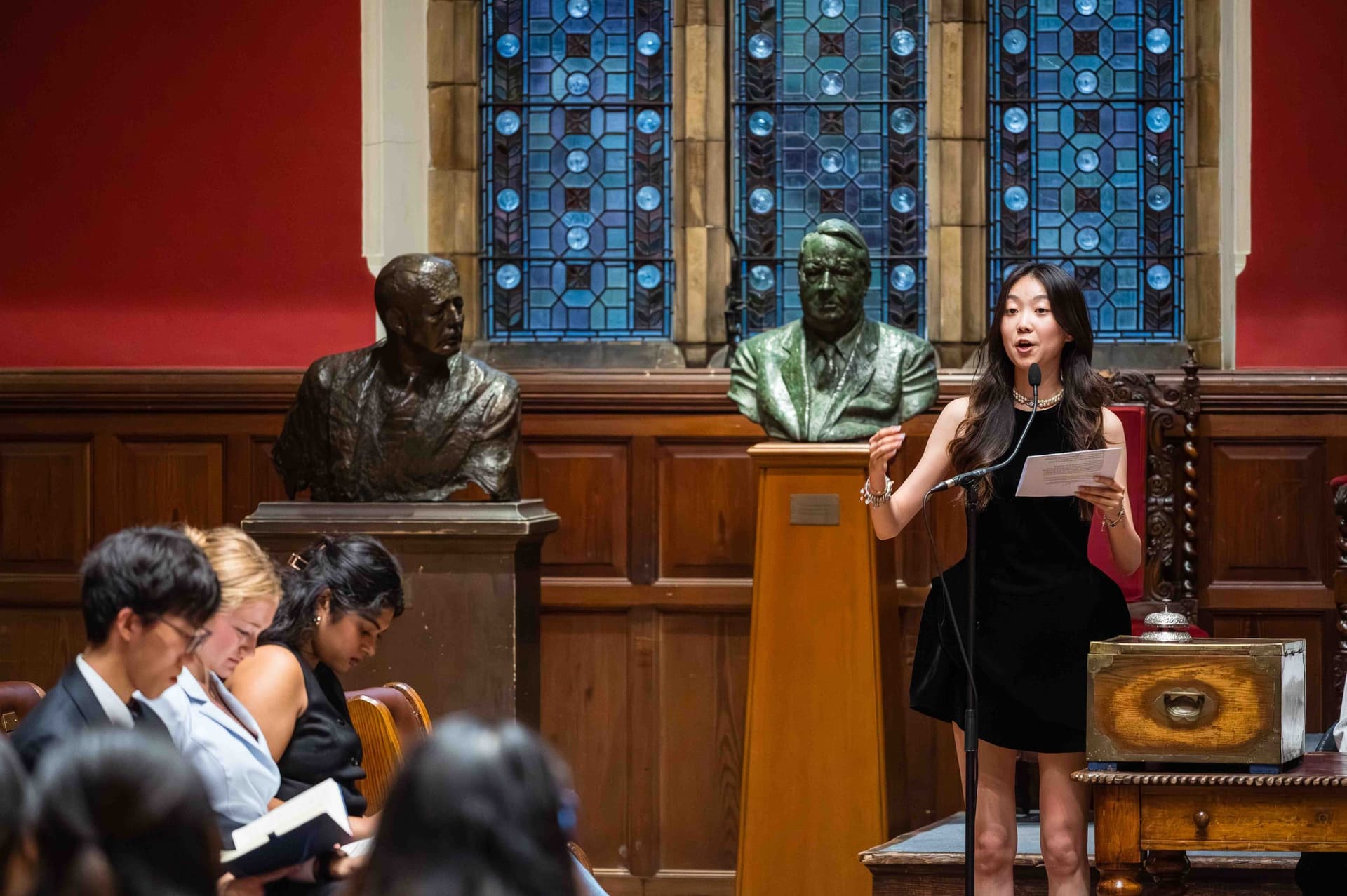
Whether it is a politician guiding a nation through crisis, a visionary tech entrepreneur disrupting the global business landscape, or an inspirational activist campaigning for social justice, great leaders have the power to change the world. But what makes a great leader, and how do you become one?
View moreIn this course, students examine the development of the specialty of neuroscience. They learn the main principles of cognitive psychology, neuroanatomy and neurophysiology, and clinical methods and practices. They also explore the technology behind diagnostic tools like CT and MRI scanners.
View more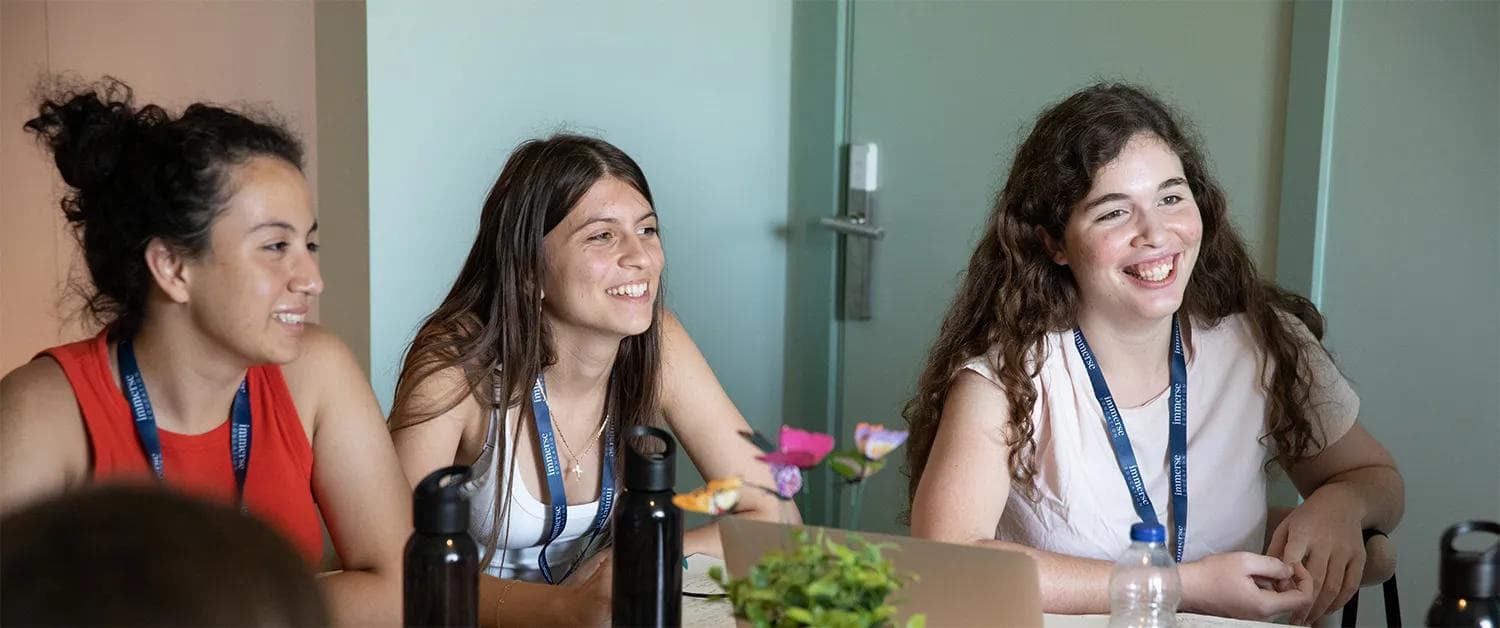

Unravel the human mind in Boston, a city at the forefront of psychological research and innovation.
View more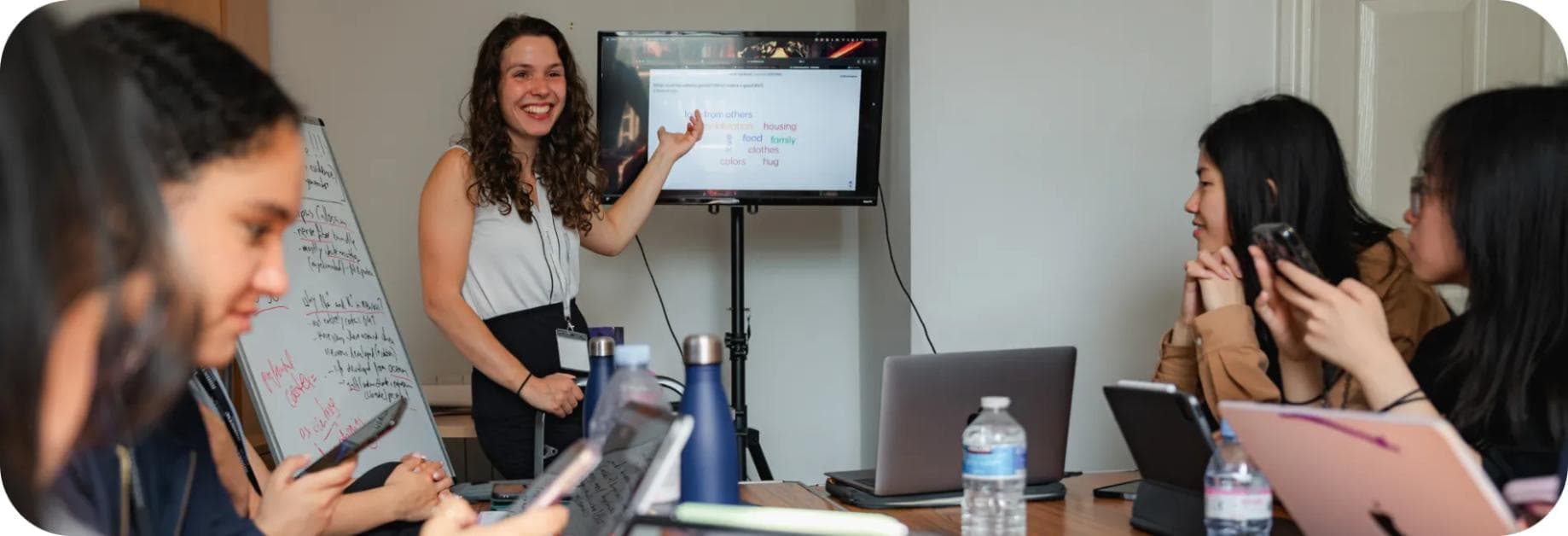
Explore the human mind in Cambridge, a city rich in psychological research history.
View moreAdvance your understanding of the mind in Cambridge, a leader in psychological research and innovation.
View more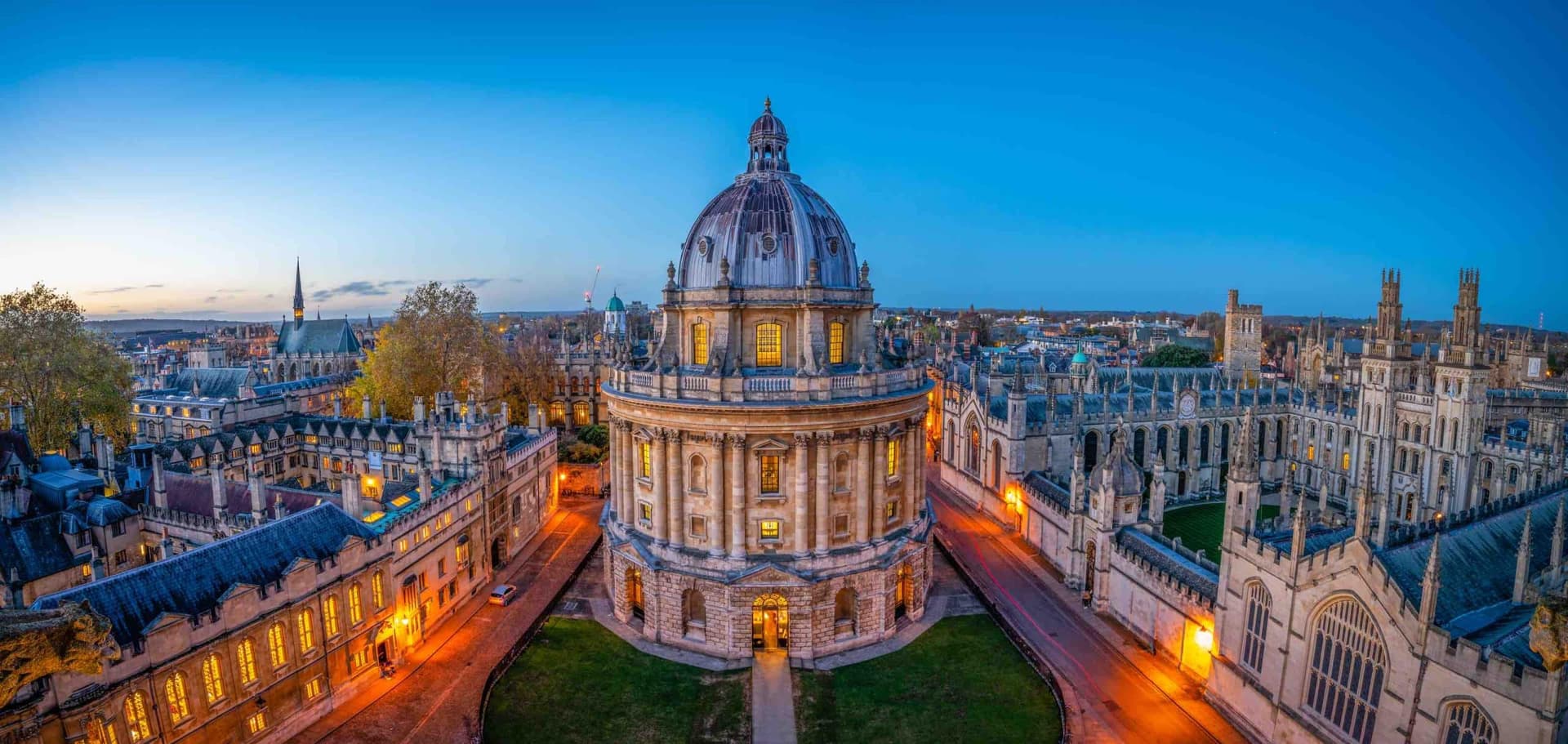
Examine the human mind in London, a city at the forefront of psychology, neuroscience, and behavioural research.
View more
Unravel the human mind in Oxford, a hub for groundbreaking psychological research and theory.
View more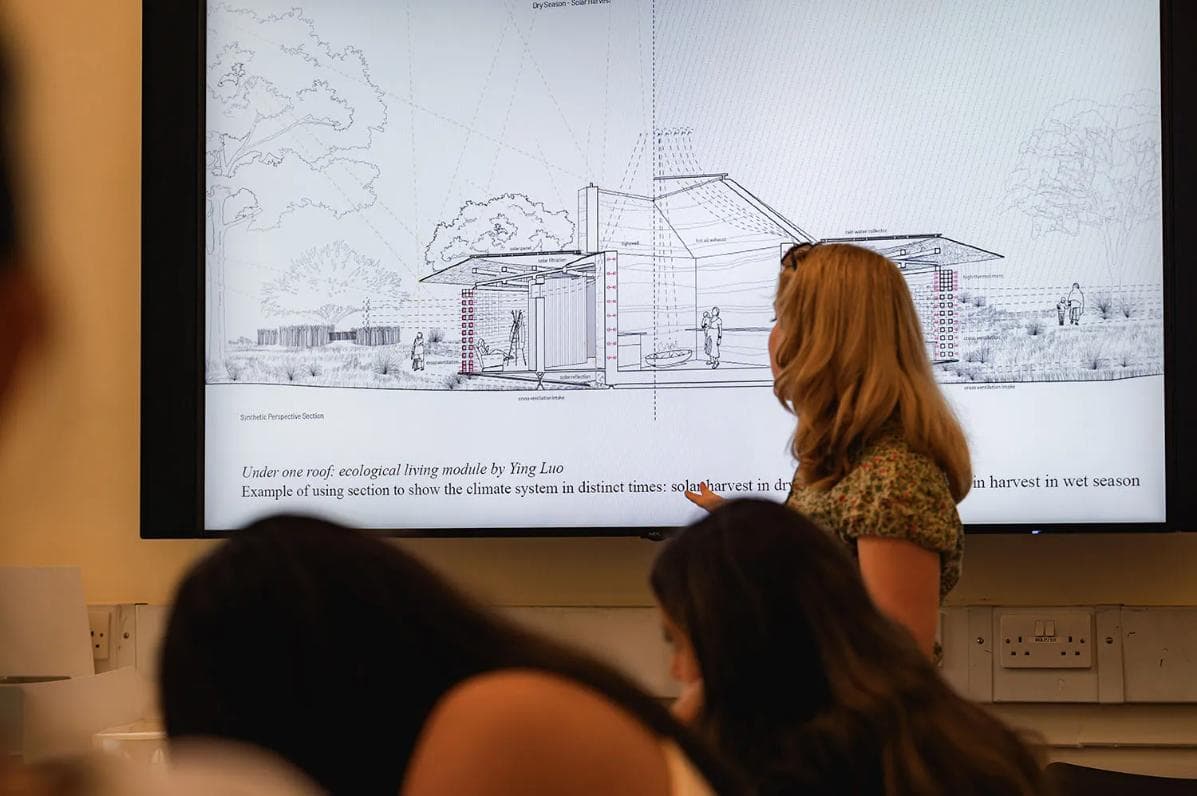
Study the human mind in Singapore, a city advancing research in mental health and cognitive science.
View more
Start exploring the human mind in Sydney, a city at the forefront of psychological research. Click to learn more.
View moreUncover the complexities of human behaviour in Sydney's diverse and dynamic urban environment. Click to learn more.
View more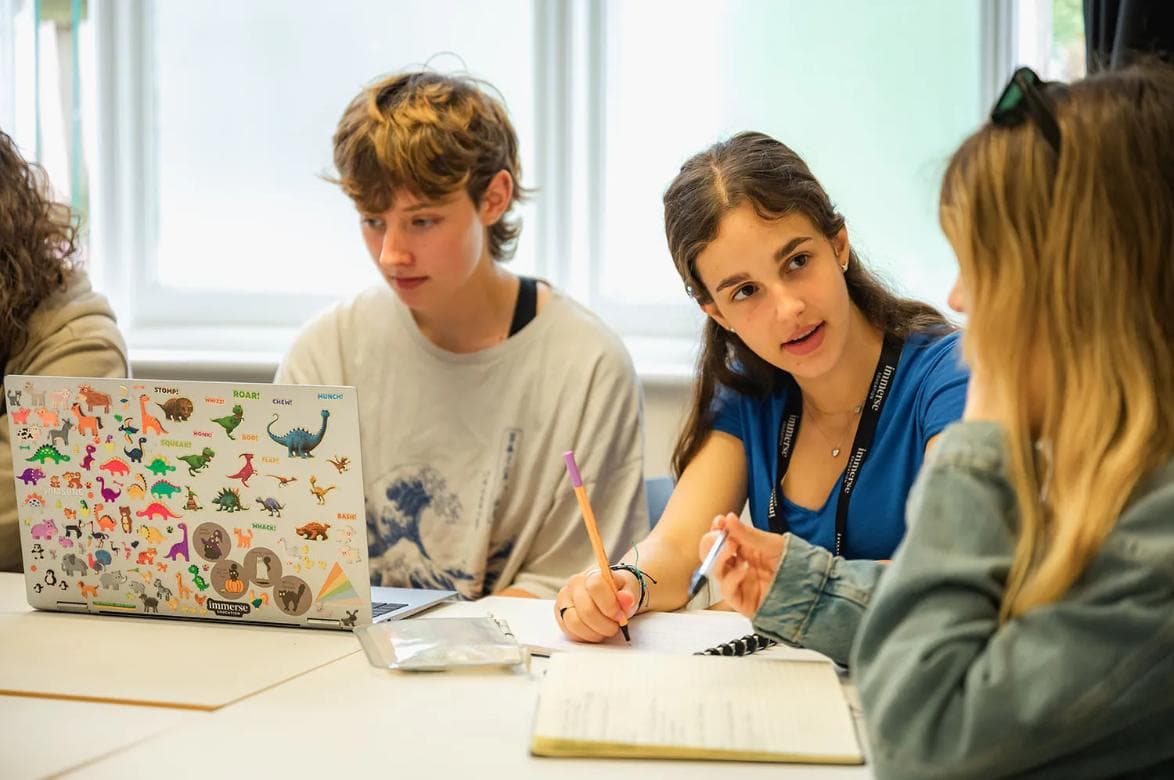
Unravel the complexities of the human mind while studying psychology in Tokyo.
View more
Unravel the complexities of the human mind in Toronto's rich tapestry of cultures and communities.
View more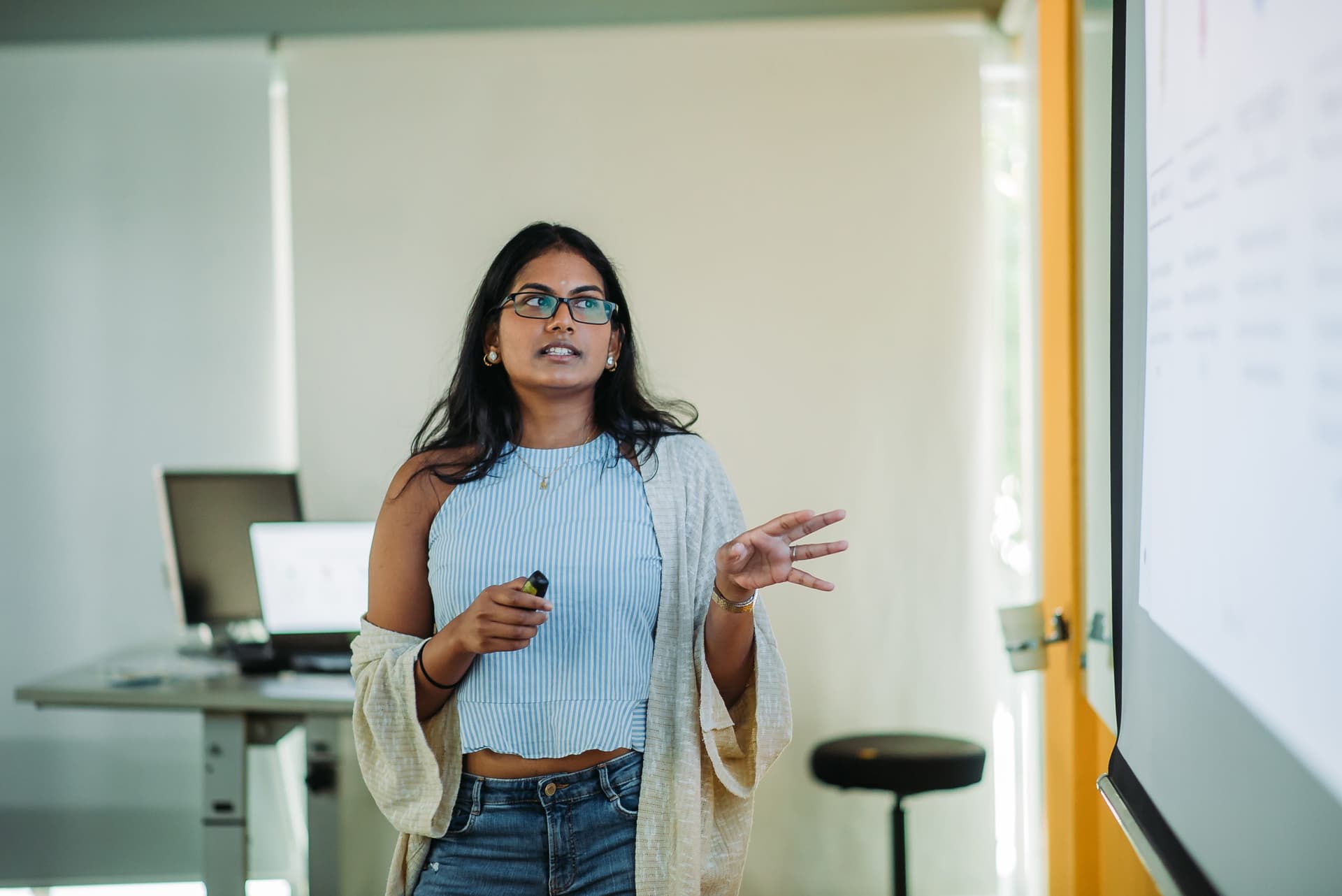

Explore what drives human behaviour and how it shapes the world around us. This course invites students to delve into the psychology of decision-making, the power of communication, and the foundations of purposeful leadership. Perfect for those interested in understanding people, ideas, and influence.
View more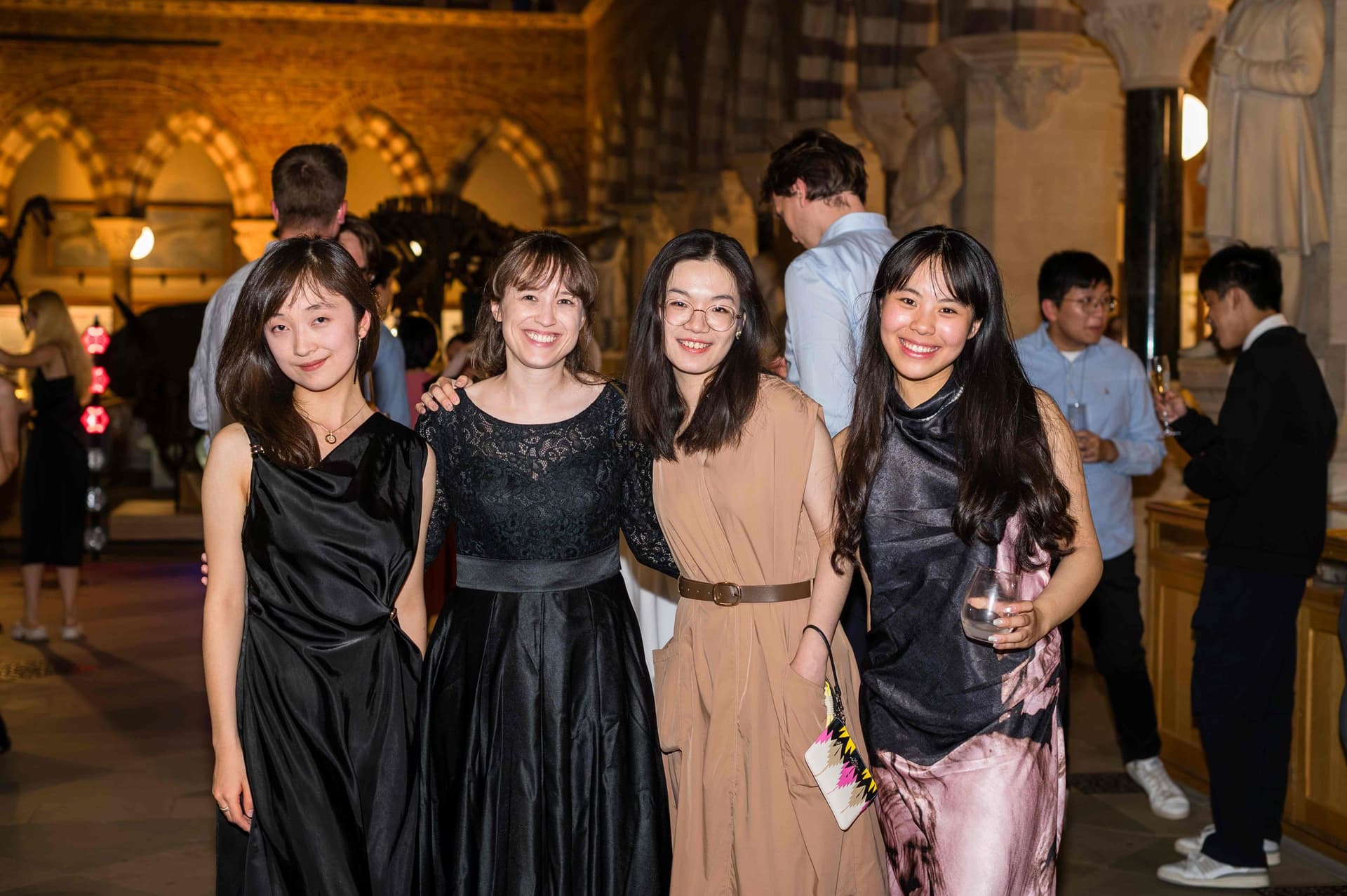
What brings people together — and what pushes them apart? This course explores how group identities are formed, how individuals understand themselves in relation to others, and how both connection and division emerge within and between social and political groups. Drawing on key theories, cutting-edge research, and global case studies, students will examine the psychological mechanisms that shape social relations including how people connect, cooperate, and sometimes come into conflict.
View more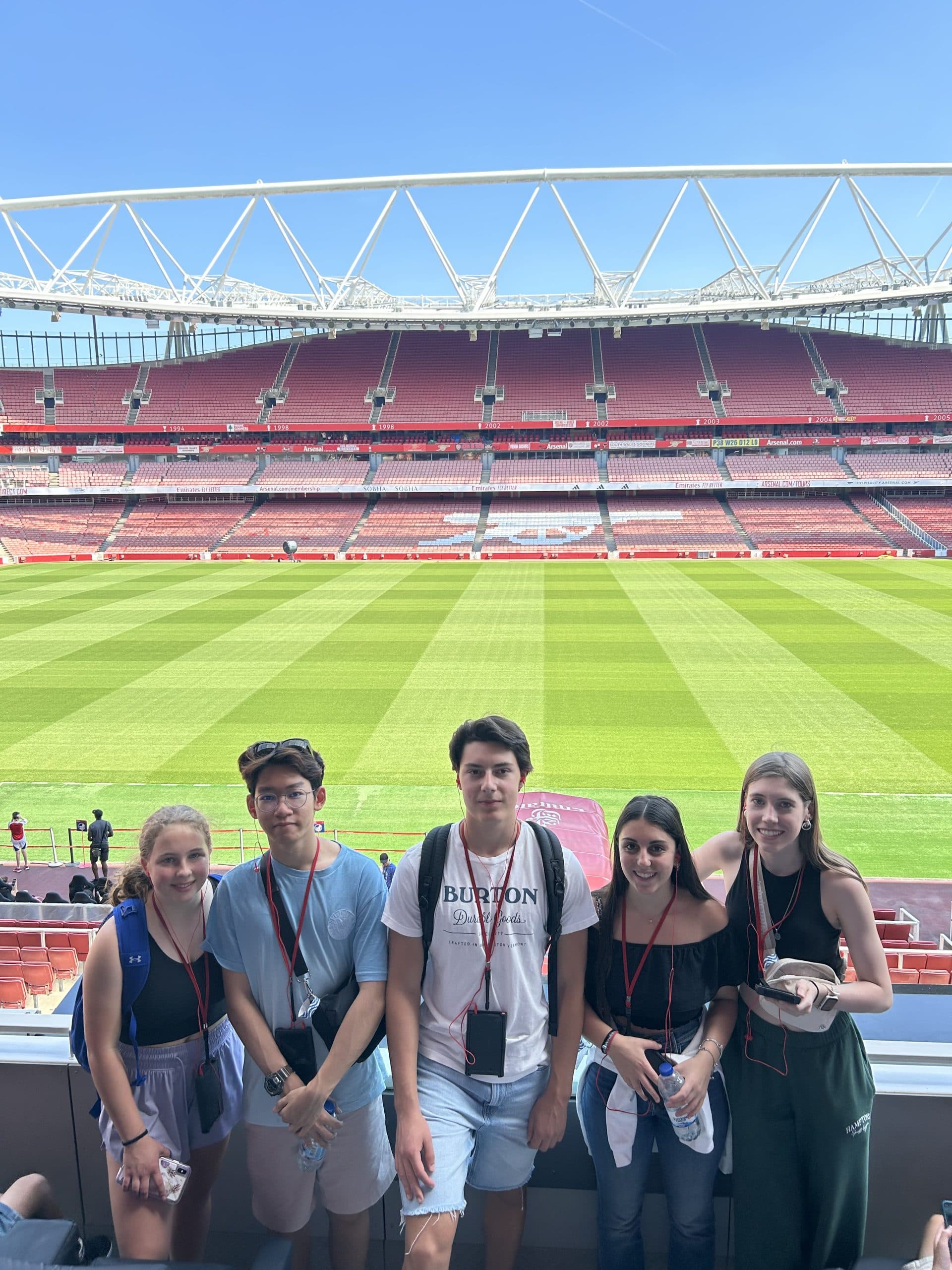
This course explores three main areas of sports medicine: biomechanics; sports psychology, and exercise physiology, including diet, fitness regimes, and the effects that artificial substances, such as steroids, have on the human body. Students also explore the ethical questions surrounding the use of special surgery and doping in sports.
View more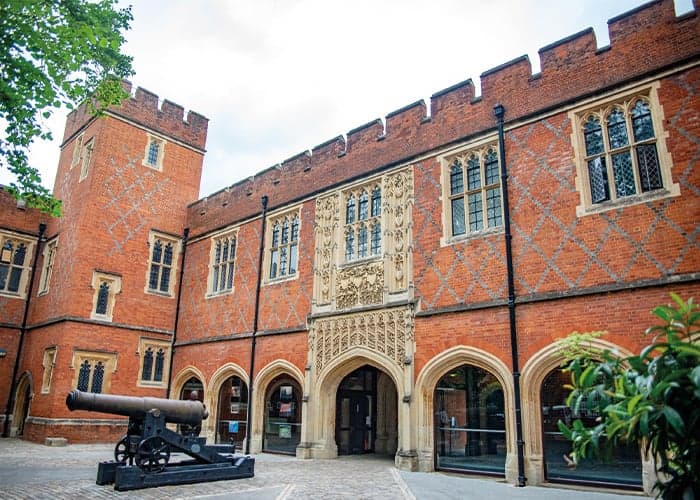
SBC's Eton College program offers diverse academic subjects in a prestigious environment for ages 12-16.
View more
Immerse yourself in Canadian culture and university-style learning at the Toronto Academic Insights summer programme for students aged 15–18.
View more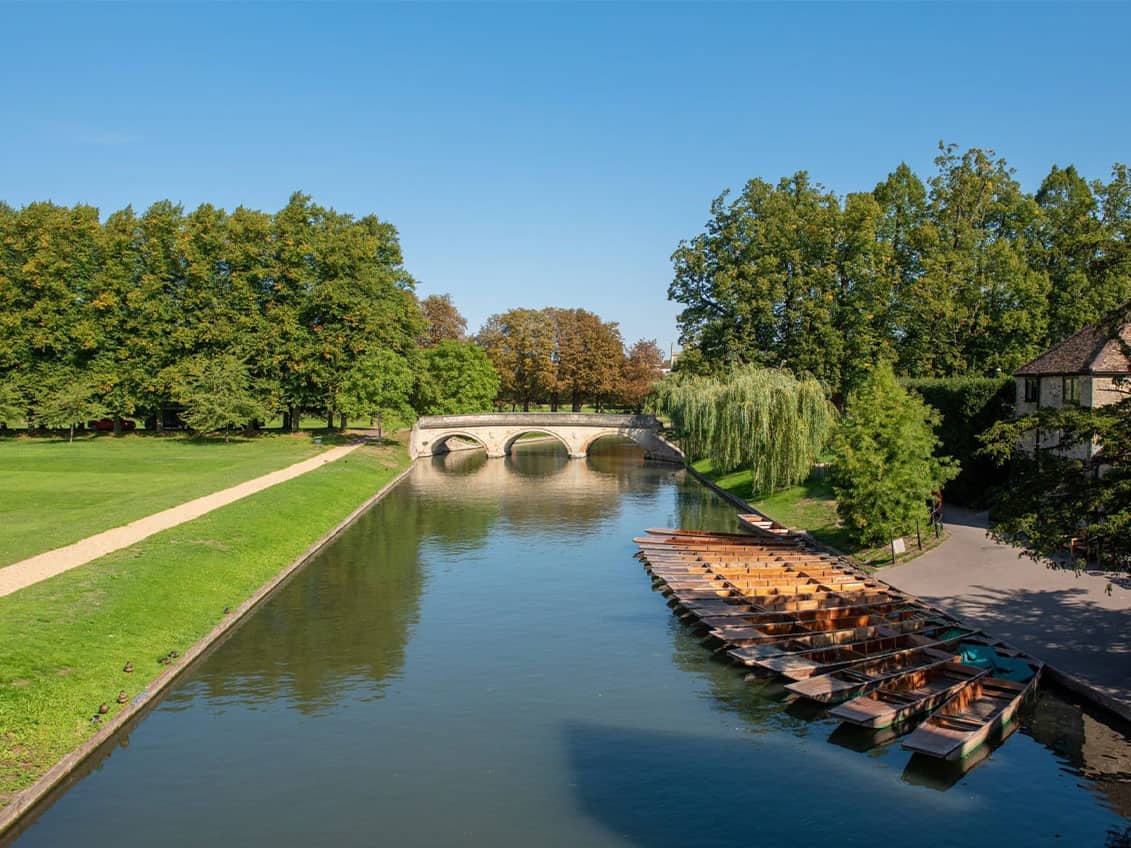
Join us at the ultimate pre-university experience, a stepping stone designed to prepare you for entry into top universities for students 14-17.
View more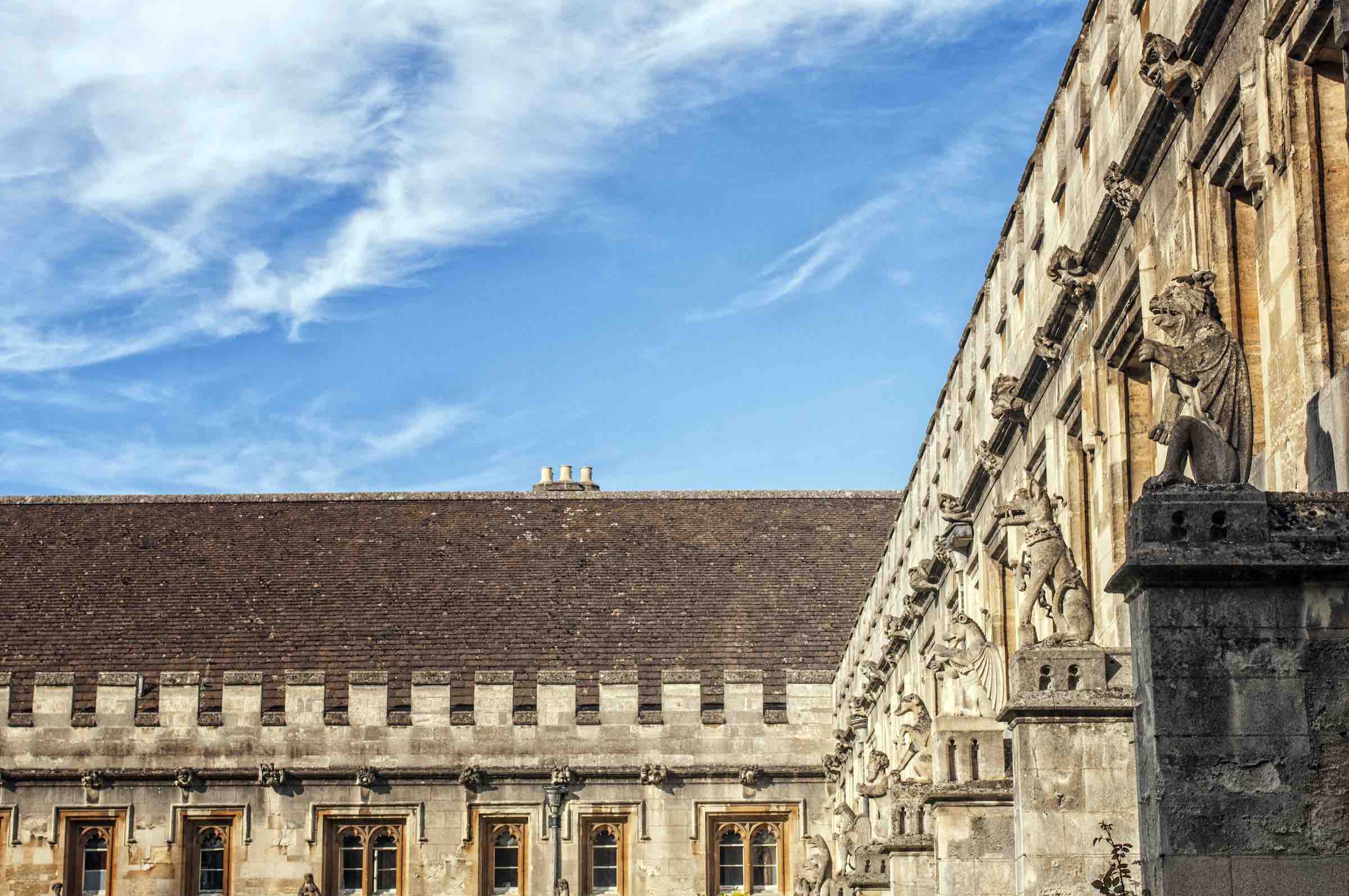
The Cambridge Tradition, offered by Oxbridge Academic Programs for students in grades 10-12, provides diverse academic courses and cultural immersion at Cambridge University.
View more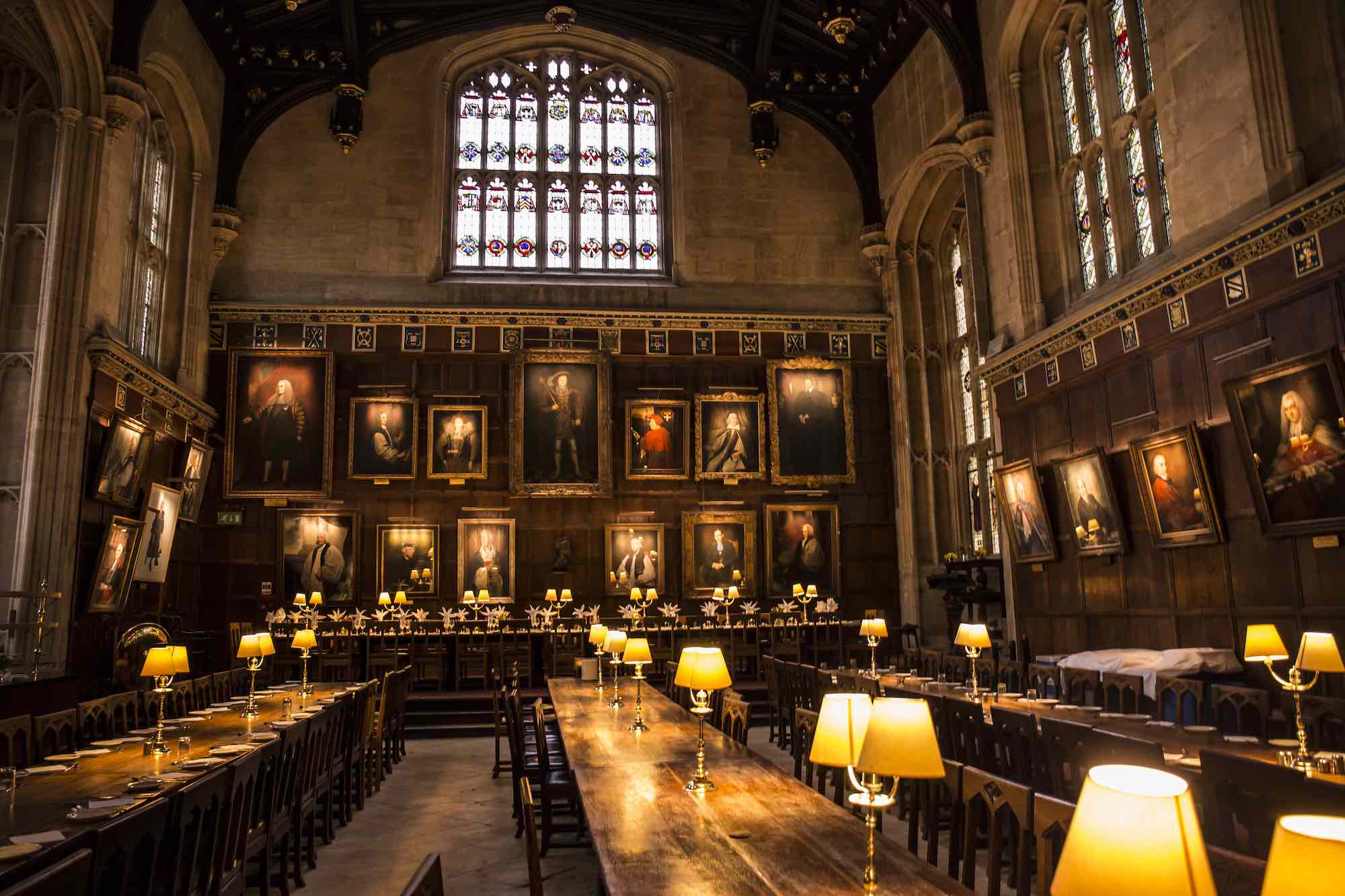
The Oxford Tradition Summer School, for grades 10-12, offers rigorous academic courses and cultural immersion at Oxford.
View more